The Early Spring Review: Love, Career, and Conflict
Director / Creator: Unknown
The Early Spring review starts where the series works best: in the small, uneasy moments between two people who want connection but don’t know how to hold it. Shang Zhitao is written as the kind of character who changes the air around her, while Luan Nian feels shut off in a way that makes every soft moment count. That push and pull gives this drama a strong emotional shape right away. It’s not just about romance. It’s about what two people give up, and what they refuse to give up, when love and ambition collide.
The Setup
Set in Beijing, The Early Spring follows Shang Zhitao after she arrives in the city and crosses paths with Luan Nian, a creative talent who keeps his distance from most people. Their relationship grows through attraction, friction, and a lot of emotional back-and-forth. The series leans on the way Shang Zhitao keeps moving forward even when things get difficult, while Luan Nian’s guarded nature makes him hard to read. Career pressure becomes part of the story too, and that matters because it gives the romance a real cost. This is a drama about learning when to hold on and when to step back.
Cast & Performances
The cast has to do a lot of heavy lifting here because the story depends on emotional shifts more than big plot twists. Jing Boran gives Luan Nian the kind of quiet tension that makes him believable as a man protecting himself from more hurt. The role needs stillness, but it also needs small changes in expression, and that’s where the performance has the most value. Sun Qian brings warmth and steadiness to Shang Zhitao, which keeps her from becoming just another cheerful lead written to soften a colder man. She feels active, not decorative. The supporting cast, including Liu Xiaobei, Qi Tianqing, Zhang Yezi, Ning Xin, Zhao Zhenyu, and Zhang You, helps fill out the social and work world around them, even if the main pair carries most of the dramatic weight. What matters most is that the leads feel like people making choices, not just types moving through a love story.
Direction & Tone
Even without listed creator details, the series seems built with a clear sense of emotional pace. The story needs breathing room, and the direction appears to let scenes linger long enough for discomfort, hesitation, and attraction to sit together. That’s the right call for this kind of drama. If the pacing is handled badly, the relationship would feel repetitive. When it works, though, the repetition becomes part of the point, because these two keep circling the same feelings until they’re ready to face them honestly. The best directing choice here is restraint. The series does not need constant noise to prove the stakes are high. It needs scenes where silence says as much as dialogue.
Visuals & Sound
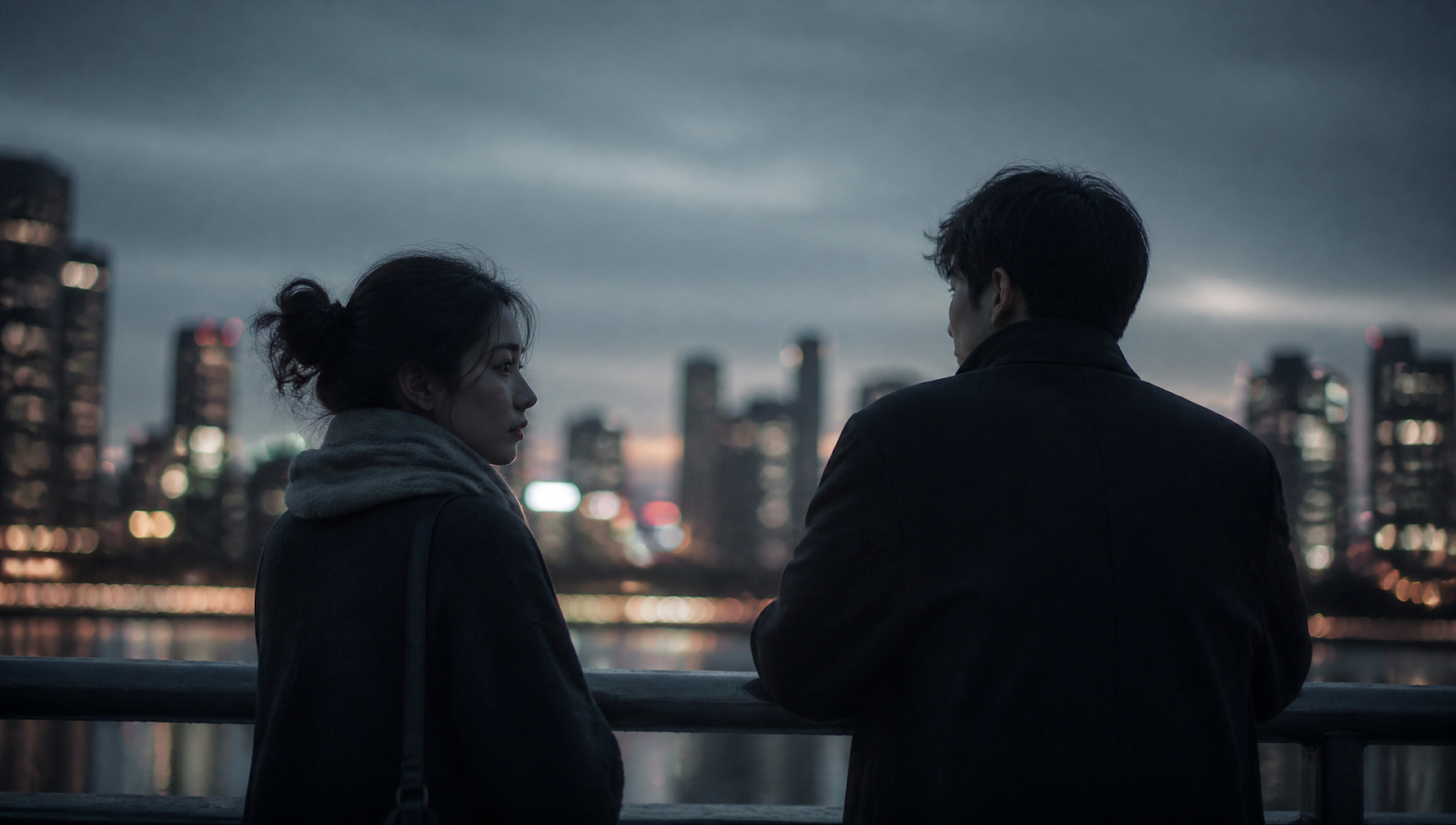
The Beijing setting gives the series room to use contrast well, especially between the city’s movement and the private stillness of the characters. A drama like this benefits from clean framing, intimate close-ups, and spaces that make the characters look small when they feel uncertain. The visuals should do more than show off the city. They should reflect how alone two people can feel even when they are surrounded by it.
No detailed score information is available, so the safest read is that the music will need to support the emotional shifts without overdoing them. This kind of drama lives or dies by whether the sound respects the scenes. If the music stays light and careful, it should help the performances breathe. If it pushes too hard, it could flatten the more fragile moments.
Her early scenes matter because they establish her as someone who is open, but not naive. That mix makes the romance more interesting from the start.
Their first real connection works because he feels hard to reach, not because he is simply cold. She has to earn every step forward.
The on-again, off-again rhythm gives the drama its emotional tension, even if it also risks becoming familiar. The conflict comes from character, not just plot.
This is where Shang Zhitao’s choices become the heart of the series. She putting work first gives her real agency and stops the romance from swallowing her whole.
The ending idea is strongest when both characters have changed enough to face each other honestly. That final balance is the series’ main emotional goal.
Pros & Cons
- Strong central relationship built on emotional tension
- Shang Zhitao has clear agency
- Luan Nian’s guarded nature creates real friction
- Career pressure adds stakes beyond romance
- The story has room for character growth
- The romance setup may feel familiar
- Repeated breakups and reunions can weaken momentum
- Luan Nian’s distance could frustrate some viewers
- The supporting cast may not get enough room to matter fully
Final Verdict
The Early Spring looks like a thoughtful drama with a clear emotional target: two people learning how to meet each other without losing themselves. That’s a solid foundation, and the cast appears well chosen for it. The series will likely work best for viewers who like relationship stories that take their time and let character choices drive the tension. It may not escape every familiar beat, but the heart of it feels sincere. Rating: 7.5/10
Frequently Asked Questions
It follows Shang Zhitao and Luan Nian as they move through a difficult romance shaped by career pressure, emotional distance, and personal growth.
It is listed as a drama, but the central story clearly leans on romance and relationship conflict.
The verified cast includes Jing Boran, Sun Qian, Liu Xiaobei, Qi Tianqing, Zhang Yezi, Ning Xin, Zhao Zhenyu, and Zhang You.
The verified network is Youku.
Related Titles You Might Like
- Meet Yourself
- You Are My Glory
- Lighter & Princess
- Love Endures
- Will Love in Spring
Discussion ()