Gandhari Review: A Fierce Revenge Drama
Director / Creator: Devashish Makhija
Gandhari begins with a blunt, painful idea and refuses to soften it. A mother loses her eyesight, loses her daughter in a kidnapping, and then turns that grief into a hunt. That setup gives the film instant force, and for a while it really does feel like it has somewhere raw to go. The movie is at its best when it stays close to that anger and lets the emotions stay messy. When it pulls back, the tension starts to thin out. This Gandhari review is less about surprise than about whether the film can carry its own fury, and the answer is: sometimes yes, but not always cleanly.
The Setup
The story keeps its focus tight around loss, pursuit, and the cost of revenge. It does not waste time explaining why the mother wants blood on her hands. The emotional logic is already there. What matters is how the film moves from shock to action, and whether each step feels earned. The kidnapping premise gives the movie a strong engine, but the writing also has to keep finding new pressure points so the chase does not turn flat. That is where Gandhari rises and falls. It has a clear dramatic hook, but the plotting can feel more interested in the idea of vengeance than in the shape of the pursuit itself.
Cast & Performances
Taapsee Pannu carries the film’s emotional weight, and the role asks for restraint as much as rage. She gives the mother real pain instead of turning her into a simple action figure, which helps the movie stay grounded. Ishwak Singh and the supporting cast, including Mita Vashisht, Swastika Mukherjee, Chhaya Kadam, Jatin Sarna, Prashant Narayanan, Chandan Roy, Vishwanath Chatterjee, and Priti Shroff, add texture even when the script gives them limited room. The best scenes come when the film lets people speak with fear, impatience, or grief rather than only serving the revenge plot. Not every part gets equal space, but the central performance keeps the film from feeling mechanical.
Direction & Tone
Devashish Makhija directs Gandhari with a clear taste for anger and moral pressure. He knows the material needs grit, not polish, and he leans into that. The problem is that the film’s emotional intensity is stronger than its structure. Some stretches build real unease, but others move in a straighter line than the subject deserves. Makhija keeps the mood tense, though he does not always give the story enough fresh turns to justify that tension across the full runtime. Still, the film never feels careless. Even when it weakens, it remains committed to the same hard-edged idea.
Visuals & Sound
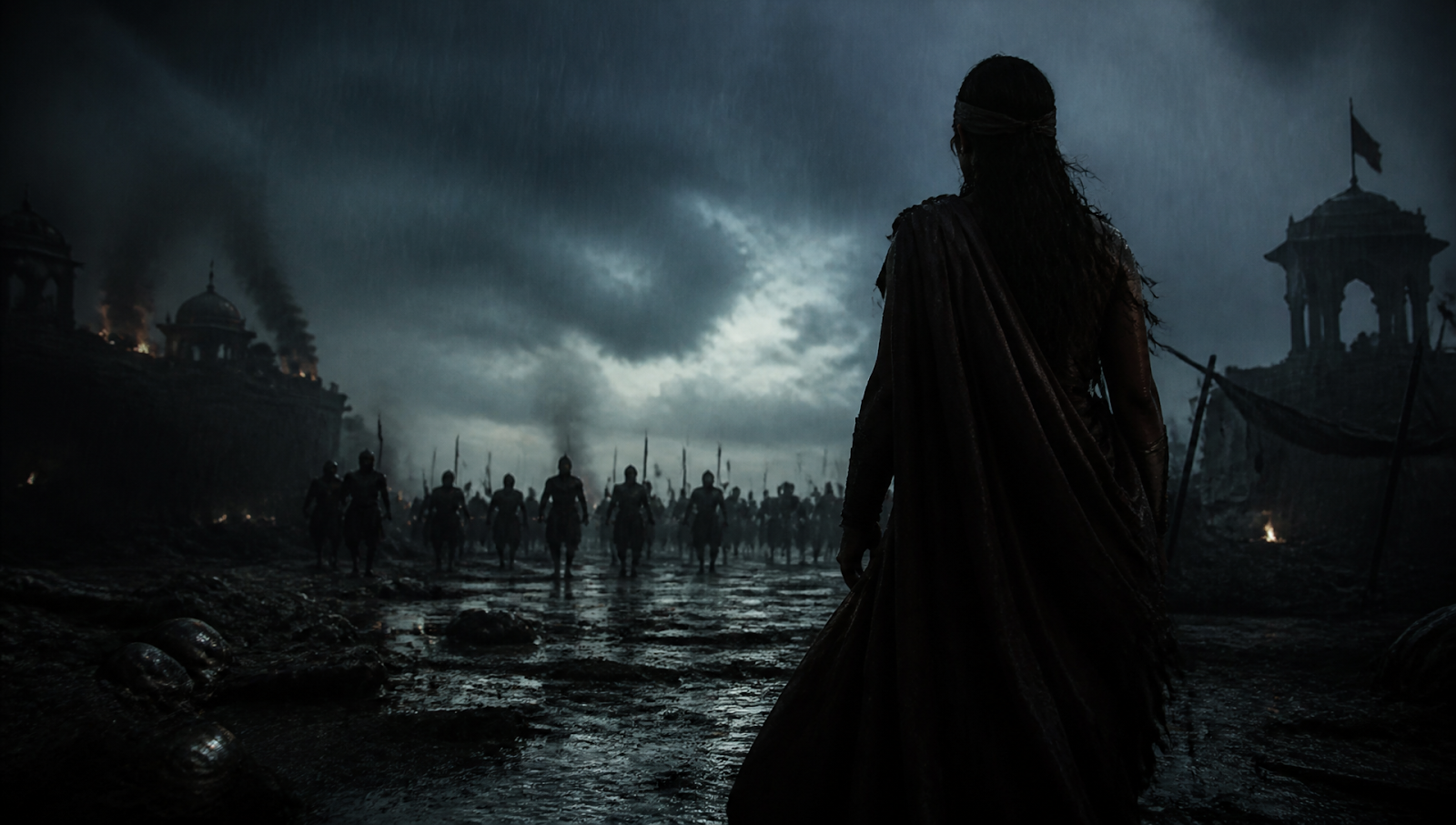
Visually, the film suits its subject by keeping things stark and uneasy. The camera favors a harsh, practical look that fits a story built on pain and pursuit. That approach helps the film feel less glossy and more direct. The imagery is not interested in showing off. It is interested in pressure, shadow, and the sense that the world has narrowed around one person’s grief. That works well for this kind of thriller.
The sound design and music work best when they stay under the surface. Gandhari does not need loud cues telling you how to feel, and it is smarter when it trusts silence, tension, and sharp bursts of sound. The score supports the mood without trying to dominate it. That said, there are moments where the film could have used a stronger musical identity. It carries emotion, but not always a memorable one.
The opening stretch does the heavy lifting by showing how quickly a life can break apart. It gives the revenge story its emotional reason without overexplaining it.
Once the mother turns from victim to pursuer, the film finds its most immediate energy. The change in tone is one of the strongest parts of the movie.
These moments matter because they test whether the film can build dread through conversation and memory, not just through action.
The middle stretch is where the movie leans hardest into the cost of revenge. It is also where some scenes feel less sharp than they should.
The ending section keeps the pressure on, but it is more interested in emotional payoff than in tidy resolution. That choice fits the film’s mood, even if not every beat lands with equal force.
Pros & Cons
- A strong central premise with immediate emotional weight
- Taapsee Pannu gives the film a steady core
- The revenge setup creates real tension early on
- The grim visual tone fits the story
- The supporting cast adds useful texture
- The story can feel repetitive once the hunt begins
- Some characters are sketched too lightly
- The film’s energy is uneven across the runtime
- The music is effective but not especially memorable
- The emotional payoff does not fully match the setup in every section
Final Verdict
Gandhari is an earnest, hard-edged revenge drama that gets enough right to stay watchable, even when the writing starts to circle its own pain. Taapsee Pannu gives it purpose, and Devashish Makhija keeps the tone severe and focused. But the film also feels a little boxed in by its own premise. It wants the impact of a deep tragedy and the momentum of a thriller, and it reaches both only in parts. As a result, Gandhari lands as a decent but uneven watch: bold in feeling, less sure in execution. Rating: 5.8/10.
Frequently Asked Questions
It follows a mother who loses her eyesight and her daughter in a kidnapping, then goes after those responsible.
The film is directed by Devashish Makhija.
The cast includes Taapsee Pannu, Ishwak Singh, Mita Vashisht, Swastika Mukherjee, Chhaya Kadam, Jatin Sarna, and others.
The runtime is 117 minutes.
It sits in both spaces, but the emotional drama drives the film more than the action does.
Related Titles You Might Like
- Mardaani
- Thappad
- NH10
- No One Killed Jessica
- Section 375
Discussion ()