Lovesick Review: Love, War, and Uneven Drama
Director / Creator:
Lovesick arrives with a strong hook: a romantic drama set during the Mexican Revolution, where Emilia Sauri is pulled between two loves while violence closes in from every side. That’s a promising setup, but it also invites a fair question right away. Will the series treat the history as more than backdrop, or will it lean too hard on the love triangle and leave the revolution feeling like decoration? Based on the setup alone, the answer could go either way.
The Setup
The series follows Emilia Sauri, a woman trying to hold onto her own desires while living through a country in upheaval. The official premise centers on her being torn between two passionate loves, but the larger pressure point is clear enough: survival, loyalty, and personal freedom do not sit easily together in a time of war. Lovesick seems built as a period drama first and a romance second, though that balance will matter a lot. If the relationships get too much attention without enough political weight, the story could feel narrower than it should. If it keeps both in play, it has a chance to feel tense and personal at the same time.
Cast & Performances
Renata Vaca has the hardest job here, because Emilia has to carry romance, conflict, and the emotional strain of the setting without turning into a symbol instead of a person. Juan Pablo Fuentes, Alejandro Puente, Diana Bovio, and Iván Amozurrutia round out a cast that suggests the series is aiming for strong emotional contrasts. The real test is not whether they look convincing in period dress. It’s whether the relationships feel specific enough to matter. A drama like this can collapse fast if the performances start sounding like people reciting their own importance. The cast has the right ingredients, but the series will need more than chemistry to make the choices feel painful rather than predictable.
Direction & Tone
With no creator or director credit listed in the available info, it’s hard to judge the series’ exact creative control, but the setup suggests a careful balancing act. Period dramas about revolution often fall into one of two traps: they become too stiff, or they turn history into wallpaper for melodrama. Lovesick needs to avoid both. It has to let the setting shape every decision without drowning the characters in speeches about destiny. That’s a tough line to walk, and the premise alone does not guarantee it will be handled well. If the direction keeps Emilia at the center while letting the unrest stay real and messy, the series could feel grounded. If not, it may end up polished but emotionally thin.
Visuals & Sound
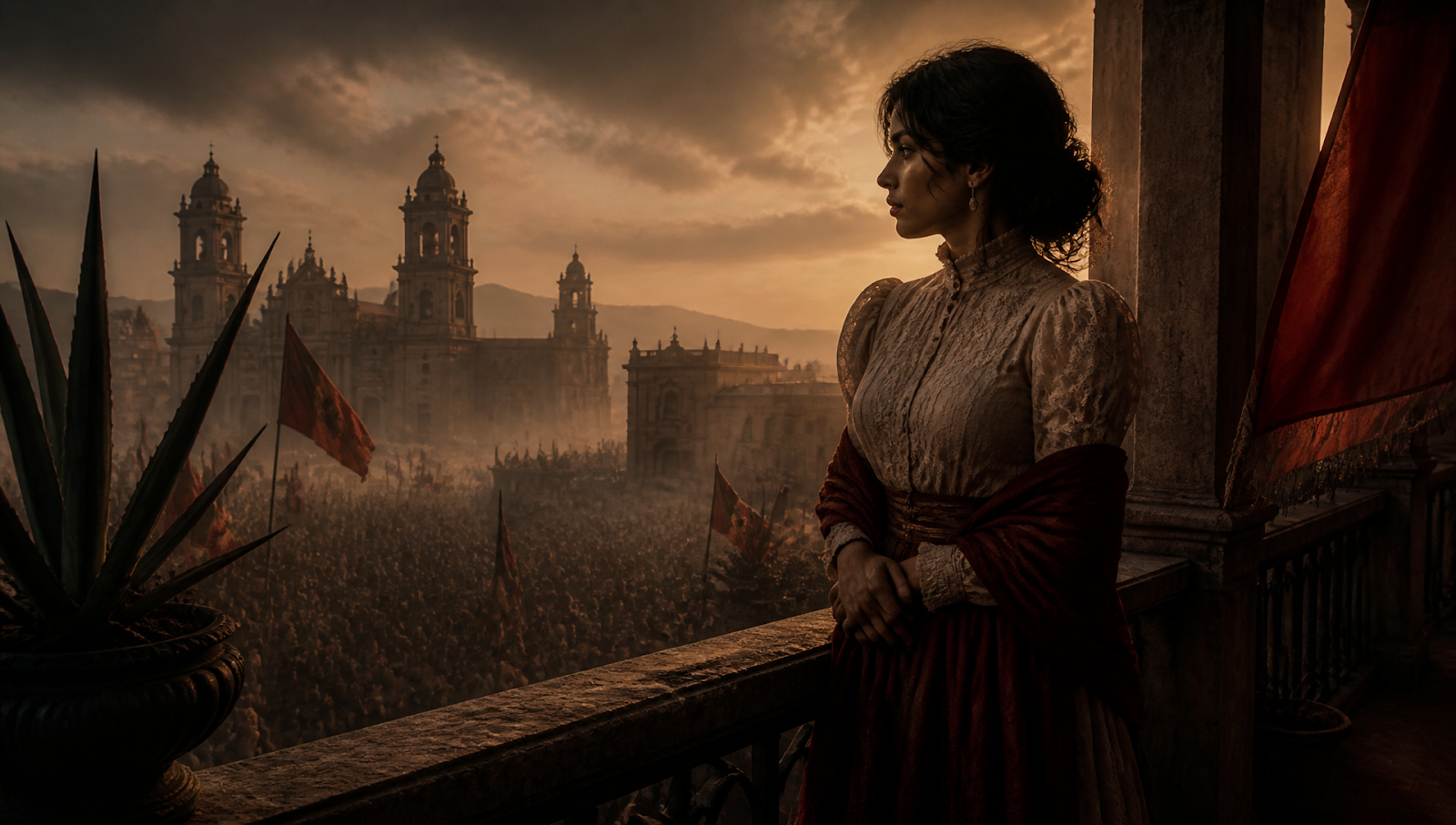
The period setting gives Lovesick room to use texture, contrast, and atmosphere in a meaningful way. The Mexican Revolution is not just a backdrop for costumes and dust. It should shape the image in a visible way, with danger, movement, and social tension all reflected in the frame. The best visual choice here would be restraint, not gloss. If the series looks too clean, the conflict loses some of its bite. If it embraces roughness and shadow, it may fit the story better.
No composer is listed in the available details, so it’s impossible to judge the score itself. Still, a series like this needs music that supports the mood without turning every scene into a cue for tears. Too many period dramas rely on swelling sound to do the emotional work for them. If Lovesick wants to feel honest, the sound design and score should know when to stay quiet. Silence can do more than a heavy melody when a choice really lands.
This is the emotional engine of the series, and it has to do more than set up romance. The scene works only if it shows why each love means something different to Emilia, not just that she is torn.
The revolution should not feel distant here. The more the series lets danger interrupt ordinary moments, the more real the setting becomes.
A good period drama knows when to stay small. Moments where Emilia’s personal choice conflicts with larger events could give the story its best tension.
If the series leans into betrayal or a hard decision, that scene could define whether Lovesick feels emotionally earned or simply arranged for drama.
Any ending beat that forces Emilia to live with the result of her decision will matter more than the romance itself. Without consequence, the whole setup risks feeling empty.
Pros & Cons
- Strong historical setting
- Clear emotional conflict
- Promising lead role for Renata Vaca
- Cast with good dramatic potential
- Room for real tension between romance and politics
- The love-triangle setup could feel familiar
- The revolution may be underused if the script focuses too much on romance
- No creator or director credit listed in the available details
- The series could lean into melodrama instead of depth
Final Verdict
Lovesick looks like a series with a solid dramatic idea and a setting that can do real work, not just decorate the frame. I like the tension in the premise, especially the way Emilia Sauri is placed between private desire and public violence. But I’m not ready to call it more than promising. This kind of story needs discipline, and it needs to trust the audience more than many romance dramas do. If it does that, it could be very good. If it doesn’t, it may end up красивely staged but emotionally obvious. For now, it earns a 6.8 out of 10.
Frequently Asked Questions
It follows Emilia Sauri during the Mexican Revolution as she faces a choice between two loves while living through violence and political unrest.
It is a series.
It is a drama series.
It is set to release on Netflix.
The listed cast includes Renata Vaca, Juan Pablo Fuentes, Alejandro Puente, Diana Bovio, and Iván Amozurrutia.
Related Titles You Might Like
- The Crown
- The Queen's Gambit
- Narcos: Mexico
- Como agua para chocolate
- Y Tu Mamá También
Discussion ()